
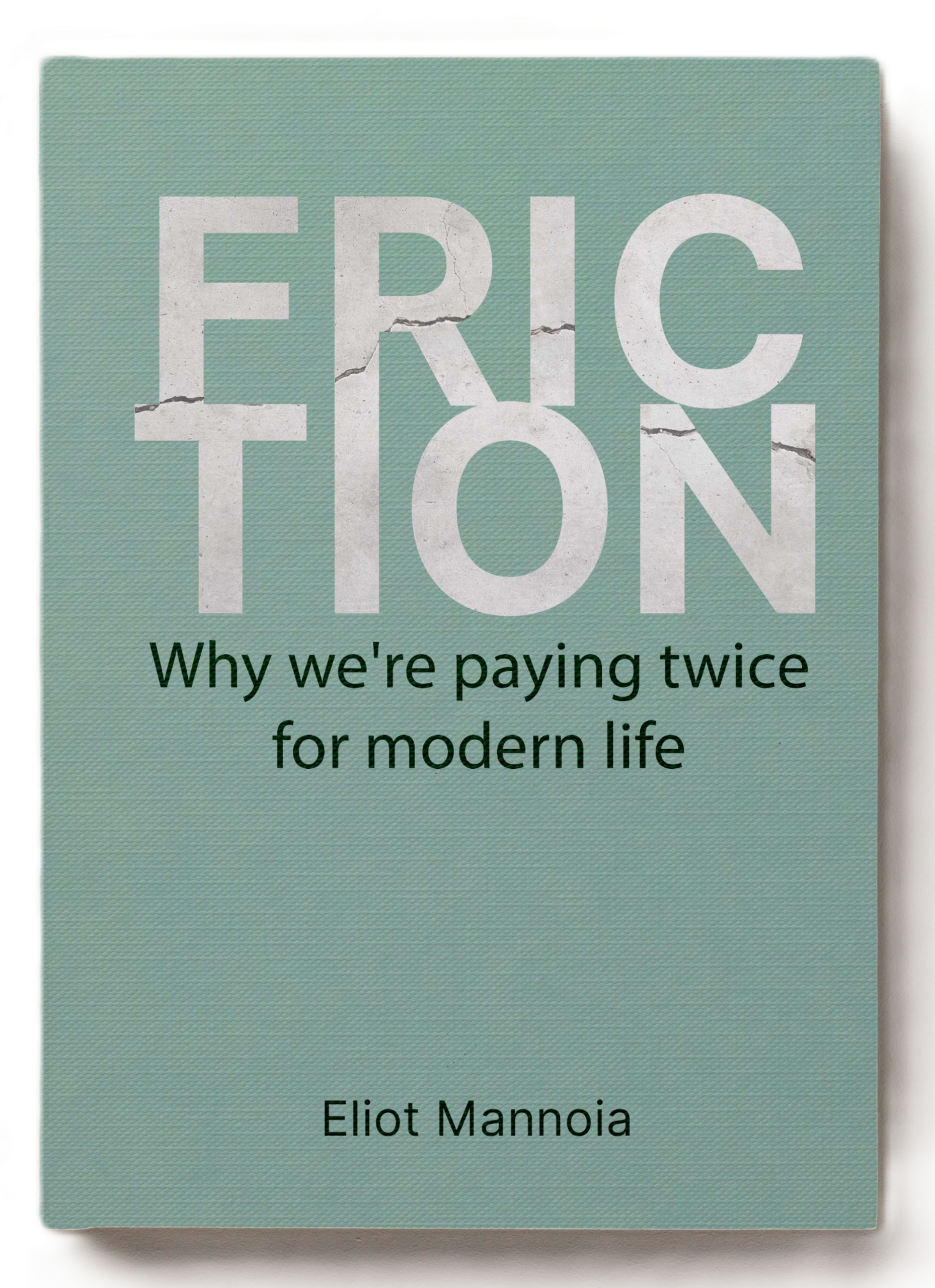
We are becoming artificial humans
We are becoming artificial humans
THE PREMISE
Something feels off. You can't quite name it.
Your life has never been more optimized. Groceries arrive by algorithm. Your sleep is scored. Your commute is engineered away. Every inconvenience has been solved, and yet something still doesn’t add up.
We take the escalator all day, then pay a gym to climb their stairs. We download meditation apps to recover the stillness our devices eroded. We swipe for connection in cities dense with people. A six-trillion-dollar wellness industry now sells back the effort, focus, and texture that ordinary life once supplied without branding.
This isn’t a glitch. It’s a pattern. And once you see it, you see it everywhere. In your gym, your relationships, your children’s childhoods, your workday. In the quiet distance growing between you and the people you’re supposed to be closest to.
Friction names the thing we removed without noticing, follows the invoice to where it lands, and offers a practical framework for reclaiming what matters without going backward.
This isn’t anti-technology. It’s pro-human.

How frictionless is your life?
13 questions. No right answers. Just patterns.
At the end, you'll see your Friction Type.
No judgment. Just a mirror.
Your Friction Type
None of these types are fixed. They shift depending on how much friction you allow back into your life.
Your result says more about the systems around you than about you.
Want twelve small experiments to change your type?
The 90-Day Re-Entry Plan: twelve small experiments for reclaiming what matters. Scroll down to subscribe. The plan is free.
THE WITNESSES
The invoice doesn't land in statistics. It lands in lives.
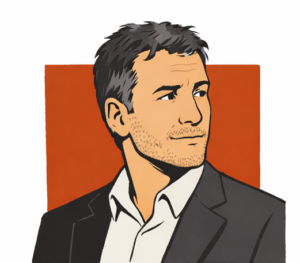
Michael
47 · London
A corporate lawyer who pays to climb stairs after a day spent avoiding them. He watches his StairMaster graph tick upward and wonders when effort became something he had to schedule.
He’s going to pay to climb stairs. After spending his entire day avoiding them.

Maya
24 · Cape Town
Raised in the optimized version. Her sleep is scored, her meals are algorithmic, her friendships swipe-based. Then she gets lost in a hospital and something ancient wakes up.
She wasn’t used to that absence of a signal telling her where to go. She liked it.
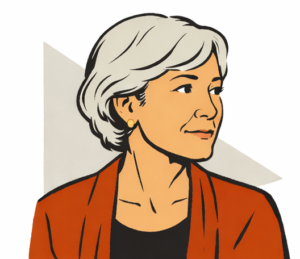
Evelyne
68 · Vienna
She remembers when delays were normal and neighbors’ knocks were part of the day. She watches her grandchildren vanish into screens. One Sunday, she buys a bag of potatoes and three old peelers.
They are not just eating roast potatoes. They are eating the hour of their own tedious, shared, human effort.

Lucia
30s · São Paulo
Invisible to the system she trains. Three cents per image, one image every few seconds. Her clicks make the smoothness you feel possible.
The tasks are frictionless. The outcomes feel strangely empty.
We progressed until we no longer needed each other. Whether we still want each other is the question technology never asks.
— From the introduction
THE FRICTION FRAMEWORK
A practical blueprint for staying fully human
Not digital detox. Not neo-luddism. A conscious design for the friction that gives life texture, applied across body, mind, relationships, and work.
01
Artificial Hardship
The deliberate reintroduction of struggle when natural hardship disappears. Taking the stairs. Washing the dishes. Choosing the slower route. Not punishment but capacity.
02
Creating Contrast
Introducing deliberate peaks and valleys. The cold shock, the deep focus, the moment of real hunger before a meal. Without oscillation, the signal flatlines.
03
The Human Curve
The pauses, detours, and second thoughts that efficiency tries to eliminate. Doubt, hesitation, and the walk that solves the problem. The curve is not inefficiency. It’s where judgment lives.
Imagine a river. The rock is Artificial Hardship. The ripple is Creating Contrast. The meander downstream is the Human Curve.
The Friction Compass
A pocket heuristic: when to add effort, when to remove it.

Not all friction is equal. Some excludes. Some connects. Here’s how to tell the difference.
WHY THIS MATTERS IN 2026
We engineered friction out of modern life. Then we started engineering ourselves.
We count steps because our days no longer ask us to walk. We check a wristband to learn how we slept instead of noticing how we feel. We talk in optimized fragments. TL;DR. Action items. Sync up. Our vocabulary has started to sound like our software. The change happened gradually enough that most of us missed it. We didn’t just remove effort from daily life. We appear to have absorbed the logic of the tools that replaced it. And the body keeps a quiet ledger. What convenience removed, an entire industry now sells back.
5,000
Fewer calories burned per week than in 1965. Nearly two marathons of invisible work, gone
$6 Trillion
Global wellness industry selling back what convenience removed
475 Million
Projected dating app users by 2030, swiping to replace the serendipity life once gave for free
These numbers aren’t abstract. You can read them in your gym membership, your kids’ screen time, the distance between two people sitting on the same sofa. The invoice has been arriving for a while now. Most of us just haven’t opened it.
We became artificial humans subtly. We stay human enough by design.
Eliot Mannoia asks a quiet yet unsettling question: what makes us human in a world where life no longer presents us with challenges? He explores a shift that is too recent to fully understand, too pervasive to step outside of and too attractive to easily resist. As we gain convenience by eliminating friction, from waiting and wandering to uncertainty and effort, we risk losing something harder to name. Without resistance or the minor challenges that foster awareness and connection, we must consider which aspects of ourselves begin to fade when life becomes entirely smooth. This book is a quiet, lingering reflection on humanity in an age of ease that leaves behind questions that echo long after the final page.
Reading Friction, I kept recognising connections to my own work in neuroscience and to ordinary life. Mannoia gives clear language to something easy to overlook: effort, constraint, contrast, and embodied engagement can matter for learning, attention, memory, and adaptation. What I appreciated most is his restraint. He does not force the evidence into a simple slogan, but uses it to ask better questions about what convenience may quietly change in us.
A thought-provoking and timely book that challenges us to reflect on our use of technology and preserve human agency.
The book nails something I couldn’t quite articulate before reading it: that modern convenience isn’t free, we just pay the invoice later, in ways we barely notice.
The opening image of a guy paying to climb stairs after spending the day avoiding them is the kind of observation that makes you put the book down and look around.
The book is not nostalgic or anti-technology… It’s just honest about the trade-offs we stopped questioning. I’ve caught myself thinking about it in random moments, at the gym, using an elevator, ordering delivery.
It made me more aware of these patterns in my own life, and I think that’s already a good step in the right direction.
“Friction”, written by Eliot Mannoia, offers a captivating exploration of what it means to live a life with friction versus one that is increasingly frictionless, through compelling storytelling and insightful, practical concepts-building. A great strength of the book is how it encourages readers to develop their own compass for navigating the role of technology in their lives—helping us discern when to embrace digital convenience and when to intentionally return to more analogue ways of being/living. Rich with thought-provoking research, facts, and observations, the book repeatedly prompted me to pause, reflect, and question my own habits and assumptions. At a time marked by geopolitical uncertainty and the rapid evolution of technology and AI, its message feels especially timely and relevant.
Rather than advocating for the rejection of tech-innovation, the book makes a powerful case for preserving our humanity, health, and wellbeing through a thoughtful balance between traditional practices and technological advancement. The choice is ours.
A guide to staying human in the age of AI. Mannoia names what the rest of us have only been feeling.
GET FRICTION
Available in print, audio, and ebook

THE TEAM

Eliot Mannoia
Author
Eliot Mannoia is a digital psychologist, working as a researcher, lecturer, and consultant at the intersection of psychology and technology. After studying psychology and business, he served as a certified paramedic before spending a decade in London, including five years at a global advertising agency, where he also served as chief digital officer working with clients including Nestlé, Disney, and Coca-Cola.
Now based in Vienna, he founded and runs BrandKarma, a boutique research and consultancy whose clients include IKEA, Canon, Santander, Hutchison, and the Austrian National Tourism Board.
He teaches at universities in Austria, has guest lectured at the London School of Economics, and delivers workshops on emotional intelligence and artificial intelligence to over a thousand professionals a year. Friction is his first book.

Vienna Prieto
Psychologist
Editing & Fact Checking
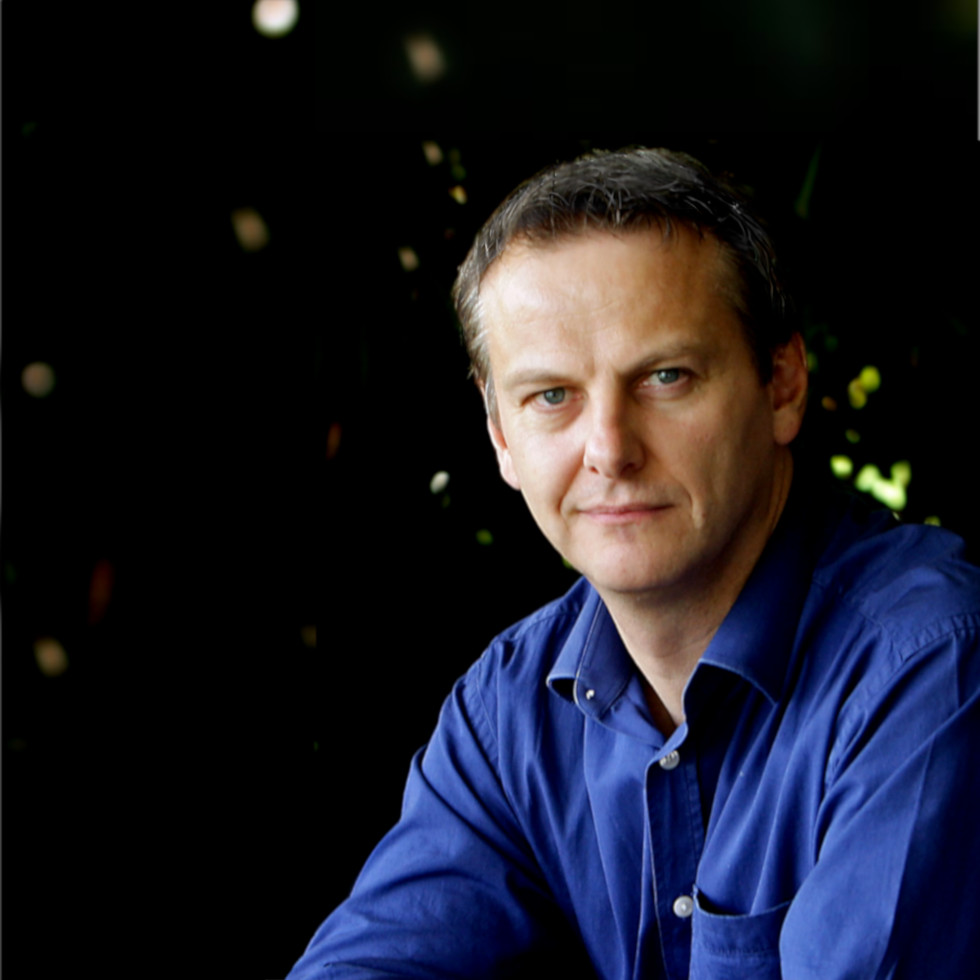
Grainger Laffan
Communications Consultant
Editing
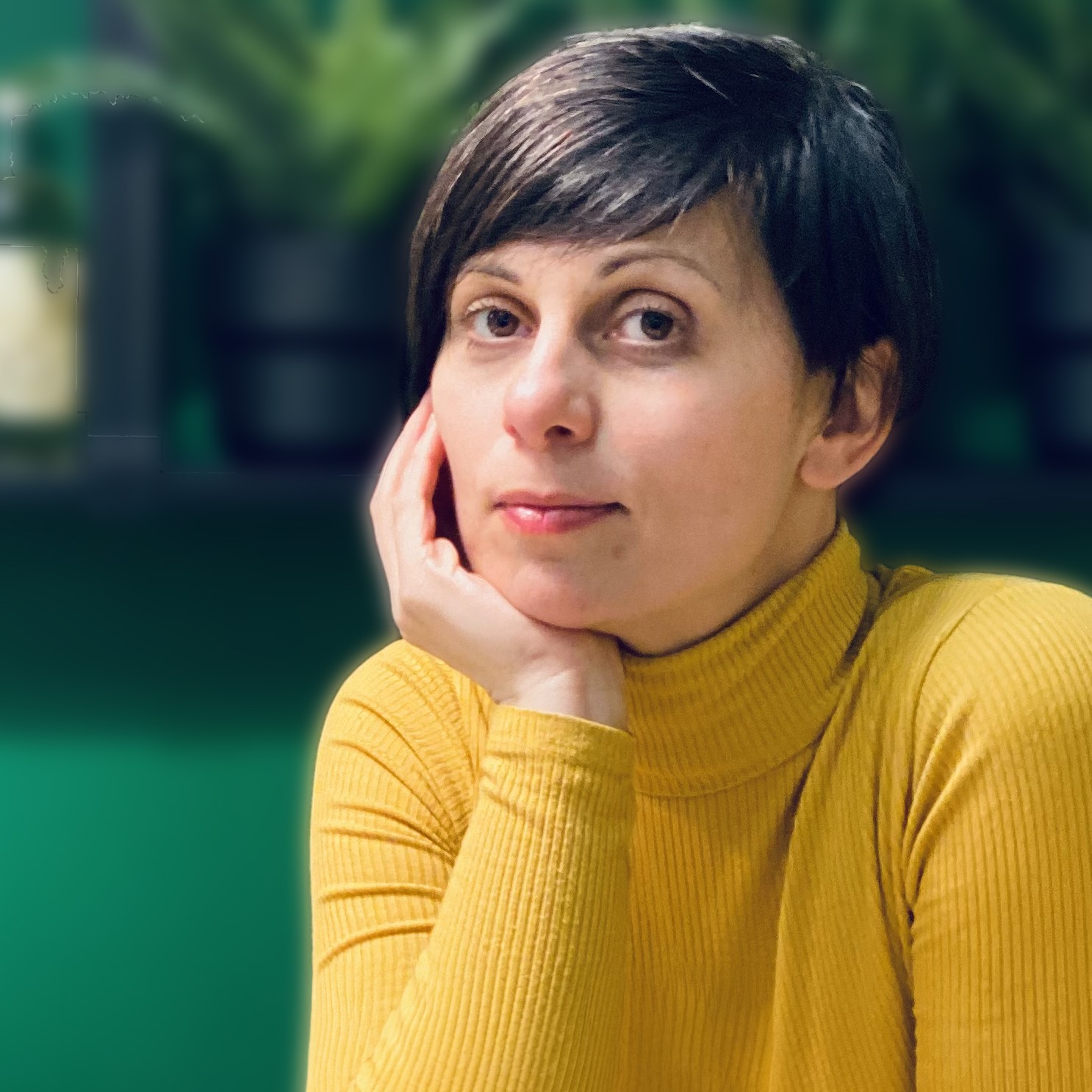
Jelena Cvetković Šarkanović
Designer
Cover & Layout
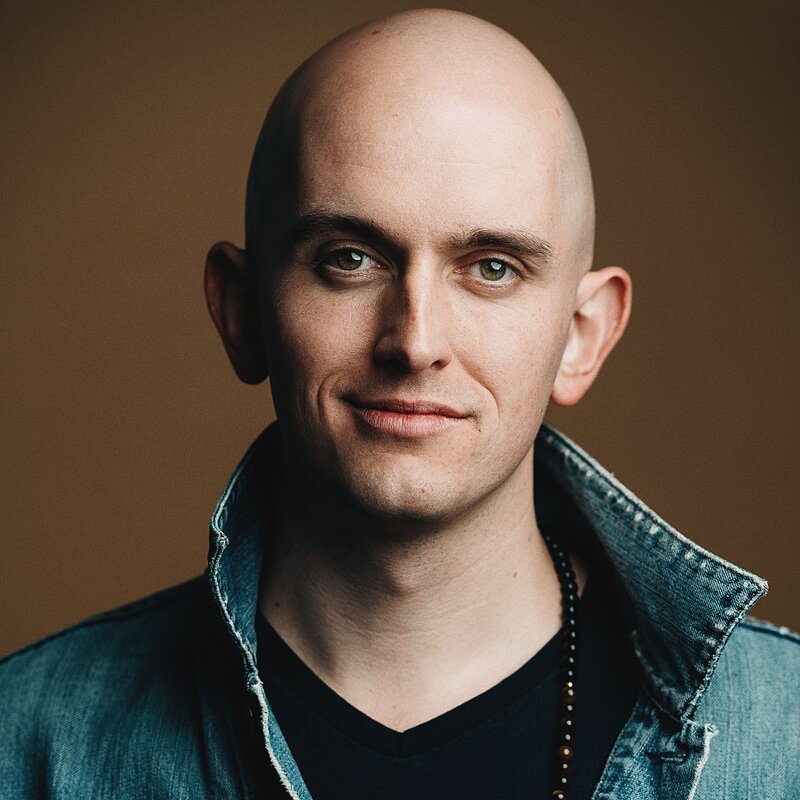
Phillip Nathaniel Freeman
Voice Actor
Audiobook
MORE
Take the next step
Get the 90-Day Re-Entry Plan. Twelve small experiments for reclaiming what convenience removed. Free when you sign up.
You’ll also get short reflections: cultural signals, research, and the occasional uncomfortable observation. A newsletter with no optimization hacks. Just friction, by design.